



Inflation slowly reduces the value of money. The same amount of cash buys fewer goods and services over time, which is why investors often look for assets that can protect purchasing power. Gold is one of the oldest and most widely used options for this purpose.
But there is an important detail: gold is not a perfect short-term inflation hedge. It does not rise automatically every time inflation rises. Instead, gold is better understood as a long-term store of value and a hedge against currency weakness, financial stress, and loss of purchasing power.
Why Investors Connect Gold With Inflation
Gold has limited supply, global demand, and no central bank can print it. This makes it very different from paper currencies. When people worry that money is losing value, they often look for physical assets such as gold, real estate, commodities, or other scarce stores of value.
The U.S. Consumer Price Index, or CPI, measures changes in the price of a basket of goods and services. According to FRED data from the Federal Reserve Bank of St. Louis, CPI is commonly used to measure inflation through the percentage change in the index over time. FRED CPI data
Gold’s role is different. It does not measure inflation directly. It protects purchasing power by being a scarce asset that is accepted globally.
Gold Works Better Over Long Periods
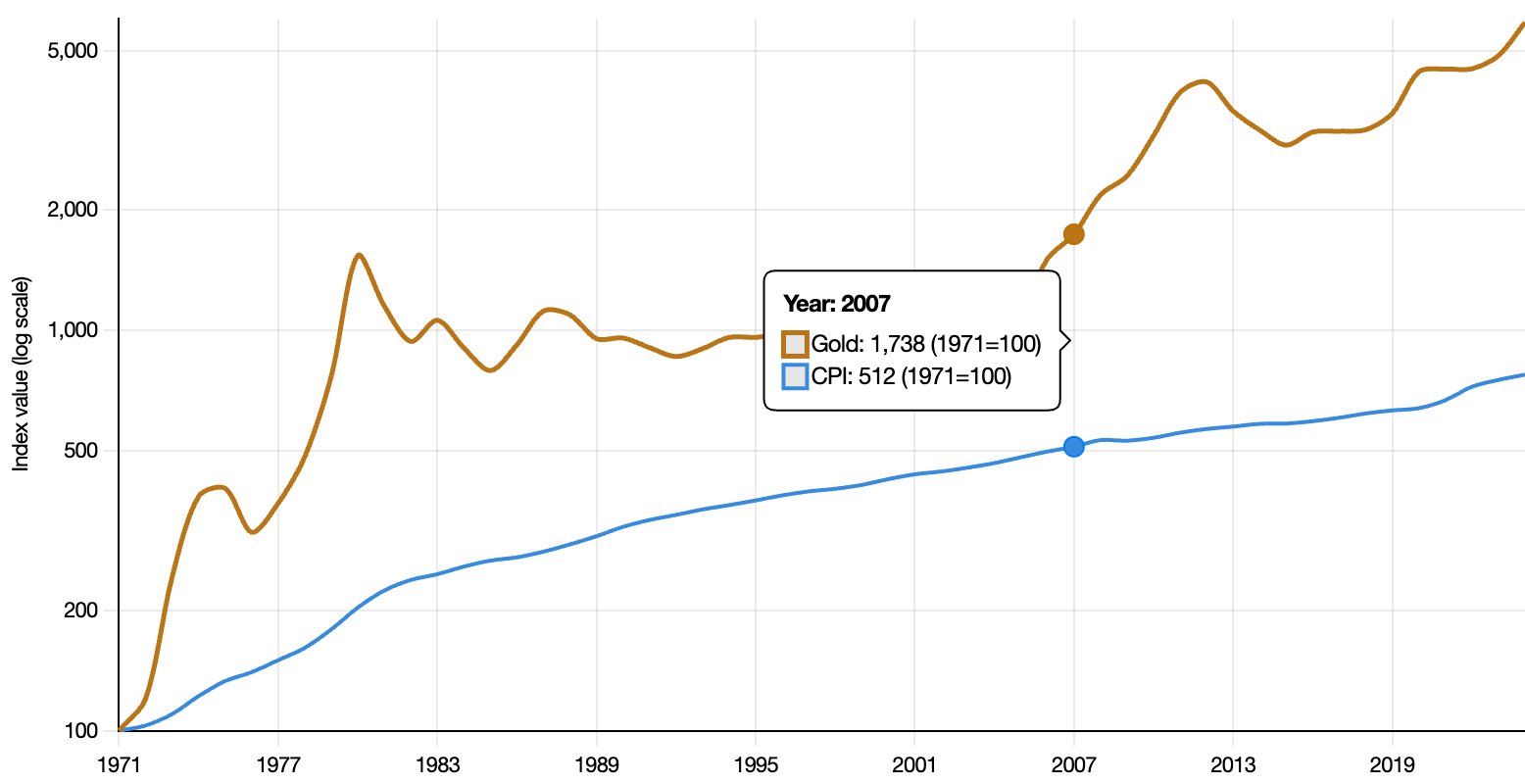
The strongest argument for gold is not that it reacts perfectly to every monthly inflation report. It is that gold has historically preserved value across long periods of currency depreciation.
World Gold Council research describes gold as a proven long-term inflation hedge, but also notes that its short-term relationship with CPI is weaker. Their analysis says only a small part of gold price movement can be explained by CPI changes alone. World Gold Council
This is why gold should not be viewed like an automatic inflation switch. If inflation rises this month, gold may rise, fall, or remain flat depending on interest rates, the U.S. dollar, investor demand, central bank policy, and global risk sentiment.
Why Gold Can Rise During Inflationary Periods
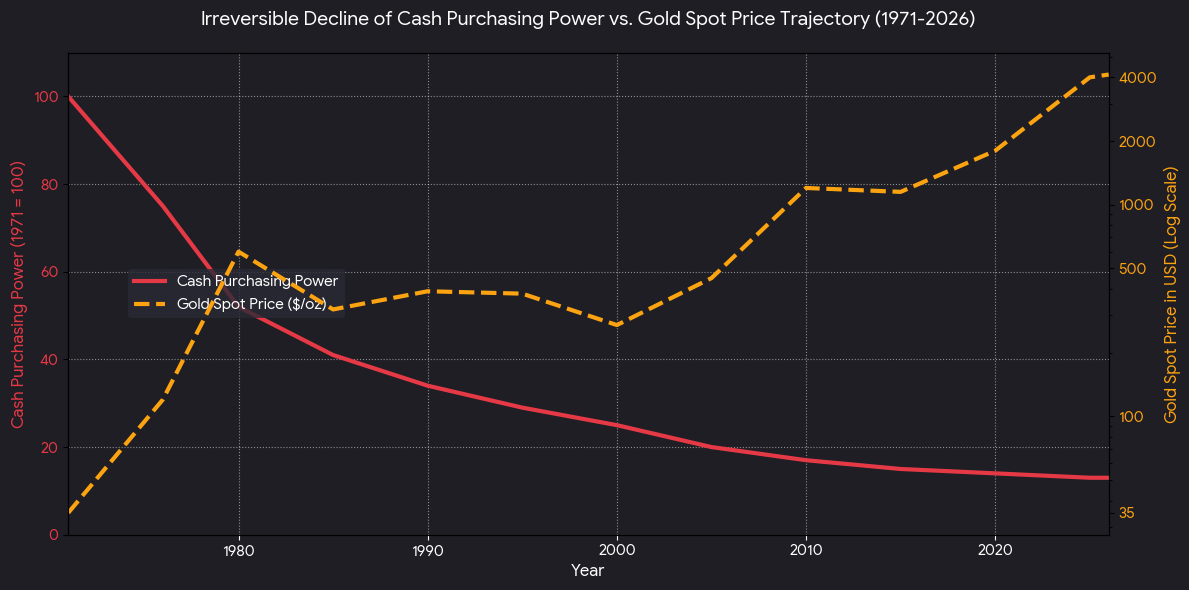
Gold often becomes more attractive when investors believe inflation will reduce the real value of cash. It can also benefit when real interest rates are low or negative. Real interest rates mean interest rates after inflation.
For example, if a savings account pays 3% but inflation is 5%, the real return is negative. In that environment, holding cash becomes less attractive, and some investors may prefer gold.
Gold can also rise when trust in currencies or financial systems weakens. In these moments, gold is valued not only as an investment, but as a form of financial insurance.
When Gold May Not Protect You Immediately
Gold can underperform during inflation if interest rates rise sharply. Higher interest rates can make bonds, deposits, and cash-like instruments more attractive. Since gold does not pay interest, some investors may move away from it when yields are high.
Gold can also fall if the U.S. dollar strengthens. Because gold is usually priced in dollars internationally, a stronger dollar can pressure gold prices.
This is why gold should be seen as part of a broader wealth-protection strategy, not as a guaranteed short-term trade.
Physical Gold vs Paper Gold
Investors can get exposure to gold in several ways: physical gold, ETFs, futures, mining stocks, or digital gold products. Each has different risks.
Physical gold has no counterparty risk if stored properly. You own the metal directly. This is one reason many long-term investors prefer coins or bars when their goal is wealth preservation.
Paper gold products can be easier to buy and sell, but they may involve management fees, market structure risk, or dependence on financial intermediaries. They can be useful for trading, but they are not the same as owning physical gold.
So, Is Gold a Good Inflation Hedge?
Gold can be a good inflation hedge, but mainly over the long term. It is strongest when the concern is not just one inflation report, but the broader decline of purchasing power over years.
Gold is not perfect. It can be volatile. It does not produce income. It can move sideways for long periods. But for investors who want a scarce, globally recognized asset outside the banking system, gold remains one of the most important stores of value.
Final Thought
Inflation is not only about prices rising. It is also about money losing purchasing power. Gold’s value comes from its scarcity, durability, and global trust.
For short-term inflation moves, gold can be unpredictable. For long-term wealth preservation, it remains one of the most respected assets in the world.